

It delivers a compact electric heating system that can reach outlet temperatures up to 1,100°C (2,012°F) and handle high inlet temperatures. Key characteristics are high power density and flexible operation for both continuous and cyclic processes.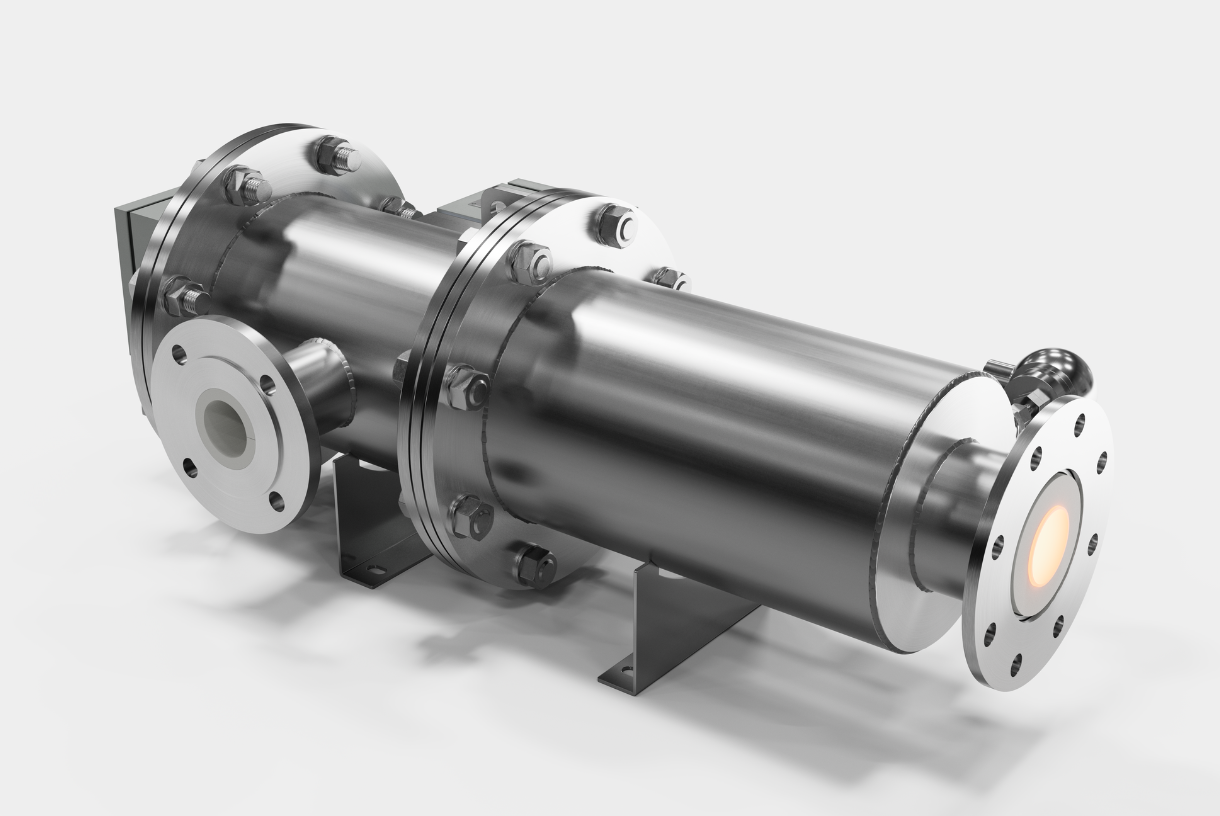 Kanthal® Flow Heater Generation 3
For customers, this creates new opportunities to electrify high-temperature process-gas applications, improving efficiency, control, product quality, safety, emissions performance, and lifecycle value.
One application where the Kanthal® Flow Heater adds value is in Solid Oxide Electrolyzer Cell (SOEC) processes.
SOEC is a high-temperature electrolysis process that uses electricity to split water or carbon dioxide into hydrogen, oxygen, and other products. It operates at around 500–850°C (932–1,562°F) and combines electrical and thermal energy.
The high operating temperature is also central to the technology’s efficiency. Compared with alkaline and PEM electrolysis, SOEC benefits from faster chemical kinetics and higher conductivity, allowing the process to operate at lower voltage and reduce power consumption per unit of hydrogen produced.
“In SOEC applications, the heating system cannot be considered separately from the overall process,” says Rishiraj Mukherjee, Global Product Manager at Kanthal. “Efficiency depends on how the complete system is designed and integrated, so the heater needs to meet the thermal requirements while also fitting into the operating conditions of the module.”
So, where exactly does the Flow Heater fit in this system?
SOEC module: heating the process and oxygen streams
In an SOEC system, the Flow Heater can serve two distinct roles: heating the fuel/process gas and preheating the oxidizer stream. Markus Mann, Manager Technology & Innovation, Kanthal.
Both functions involve demanding process conditions.
The application requires high inlet gas temperatures, while the process gas heaters typically also operate under elevated pressure. At the same time, low pressure drop is important to the overall system efficiency.
This places several requirements on the heater: it must provide the necessary gas temperature, integrate into a compact module, and do so without adding unnecessary resistance to the gas flow.
“In an SOEC module, the heater must withstand high gas temperatures and demanding conditions while minimizing pressure drop and supporting overall performance,” says Markus Mann, Manager Technology & Innovation at Kanthal.
Compact design for module integration
Space matters in an SOEC module.
The Flow Heater’s high-power density and compact design make it easier to integrate into the module or core, where space is limited.
That compactness is more than a mechanical advantage; it gives system designers greater flexibility to integrate heating duty alongside other components required within the module.
High inlet temperatures create opportunities for heat recovery
SOEC systems already operate at elevated temperatures and feature heat recovery, meaning the incoming gas can also be hot.
The Flow Heater is designed to accommodate high inlet gas temperatures, support heat-recovery strategies, and provide precise heater temperature control, improving overall system efficiency and flexibility.
“SOEC is very much a system-efficiency application,” Mann says. “If heat can be recovered elsewhere in the process, the heater needs to work with that high inlet temperature rather than forcing the gas to start from a lower temperature. That gives the system designer more freedom to optimize the overall thermal balance.”
Process performance matters
The Flow Heater supports a wide operating window and a high turndown ratio while maintaining the high outlet temperatures required by the SOEC process. Integrated temperature sensors help protect the heater core from overheating, supporting reliable operation and long service life.
Precise temperature control is equally important. SOEC ceramic membranes are highly sensitive to thermal shock and spatial temperature gradients. When controlled via thyristor controllers, the Flow Heater can regulate process gas temperatures within ±1°C, helping to prevent localized cooling in the stack and maintain stable electrochemical performance.
Combined with its high-temperature capability, these characteristics make the Flow Heater particularly well suited for use in tightly integrated electrolysis modules.
Experience in SOEC applications
The technology is not new to this application area.
Kanthal’s technology has nearly 10 years of proven Flow-Heater performance in SOEC and SOFC applications, along with a longer service life than alternatives.
For Mukherjee, that experience matters as SOEC moves toward larger-scale deployment.
“Customers are not only looking for a heater that reaches the required temperature,” he says. “They are looking at how it performs as part of the complete system — integration, efficiency, stability, availability, and service life. In SOEC applications, where Balance of Plant (BoP) represents a significant share of system CAPEX, thermal management directly impacts total cost of ownership. A robust, efficient electric process gas heater with a compact footprint, seamless integration, and dynamic turndown can help improve availability while reducing lifecycle costs as SOEC systems scale.”
One technology, endless possibilities
SOEC makes one thing clear: high-temperature process heating is never about temperature alone. Gas composition, inlet conditions, pressure, pressure drop, control, and module integration all shape the right solution. Rishiraj Mukherjee, Global Product Manager, Kanthal.
That is why the Kanthal® Flow Heater is not a one-size-fits-all product. Kanthal offers standard 10kW, 20kW & 40kW systems, plus multi-unit configurations and custom-engineered solutions for higher power needs, supported by control systems, blowers, and related accessories.
“The starting point is always the customer’s process,” says Rishiraj Mukherjee, Global Product Manager at Kanthal. “Once we understand the operating window and integration requirements, we can determine the right configuration, whether that is a standard Flow Heater, multiple units, or a custom-engineered system.”
And the potential goes beyond SOEC. The same approach can support Power-to-X and other high-temperature process-gas applications where temperature, control, pressure, and system integration are critical.
Looking to electrify high-temperature process heating or optimize an existing system?
Talk to us about your application, and we’ll help configure the right Flow Heater solution.