

This refers to their ability to maintain stable operations despite volatility in energy markets or supply disruptions.
Krister Wickman, Product Manager at Kanthal, explains, “We see a clear shift in customer discussions toward energy security. Electrification can reduce dependence on fossil fuel supply chains and give manufacturers more control over their energy input.”
This shift reflects a broader reality. Energy markets have become more volatile, and supply disruptions are occurring more frequently. Manufacturers that rely on high-temperature processes are especially vulnerable to factors outside their control.
Reality check
Most industrial processes run on heat, and many require it continuously. Furnaces cannot simply shut down; if heat is lost, production stops. Despite this reliance, many of these processes remain heavily dependent on fossil fuels, particularly natural gas. When fuel supply tightens or prices fluctuate, the impact is immediate.
This is why many companies are reevaluating how they generate heat. Wickman shares, “We see companies looking more closely at where their energy comes from. When a process depends on a fuel supply chain, there are factors beyond your control. Electrification changes that equation."
Electrification as a resilience strategy
When powered by fossil-free energy, electric heating offers numerous advantages for industrial processes. It offers high precision and uniformity, allowing for tighter control over temperature-critical operations and more consistent product quality. Electric systems can also respond quickly to changes in process demand, enabling accurate regulation of heat input across the furnace.
The absence of combustion creates a cleaner furnace environment. It reduces oxidation, deposits, and other combustion by-products, thereby improving process conditions and equipment longevity.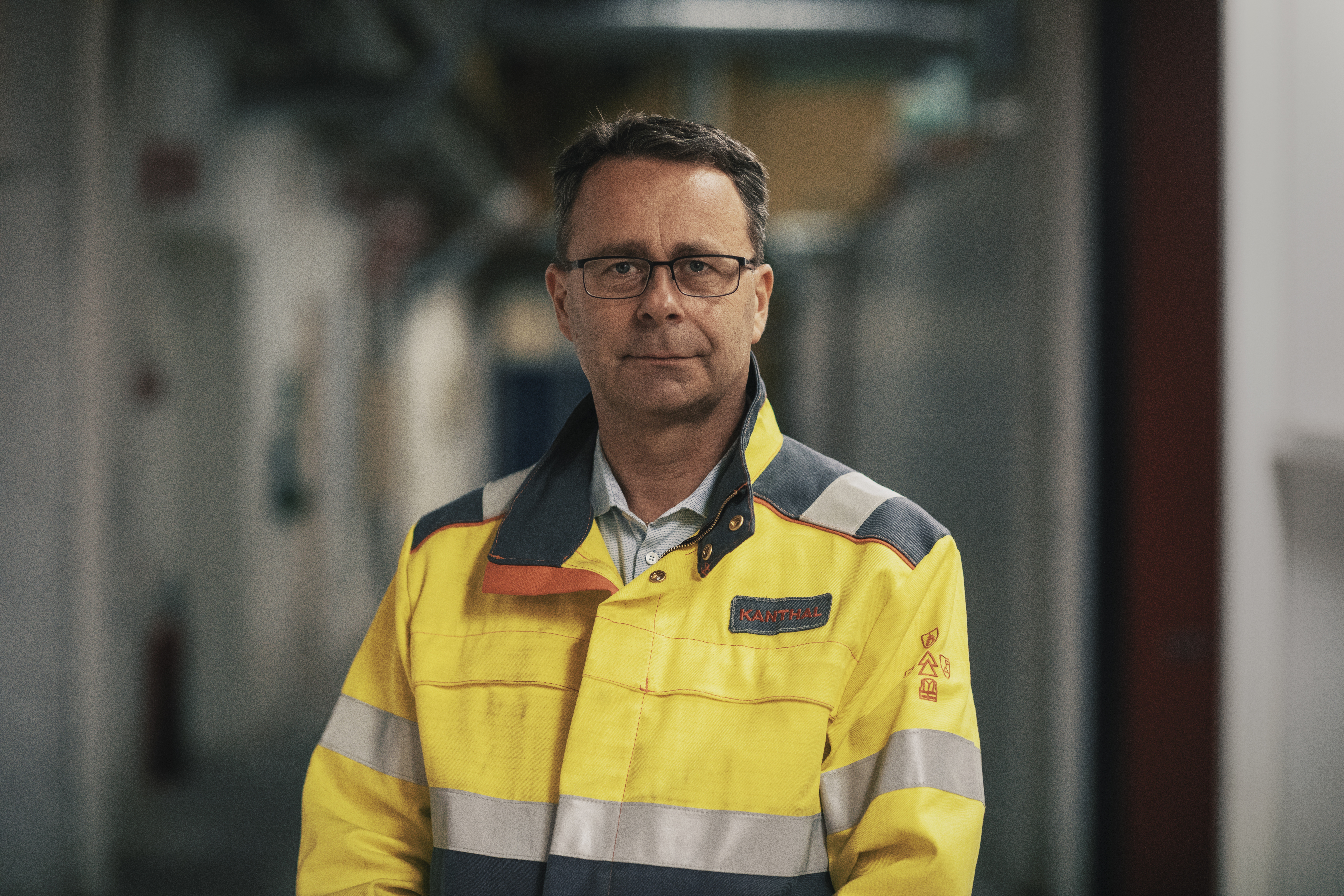 Krister Wickman, Product Manager, Kanthal.
While these benefits are important in themselves, the context in which companies evaluate them is evolving. Energy systems are increasingly judged on their ability to withstand uncertainty. Electric heating systems, powered by locally sourced electricity, become more self-contained. This localization of energy input makes operations more predictable and reduces the risk of unexpected disruptions from fuel supply.
A viable path to electrification
Transitioning from gas to electric heating is rarely an overnight decision. Industrial furnaces are critical infrastructure, and any changes must align with electrical capacity, process design, and production schedules.
As a result, some manufacturers choose full electrification, while others adopt a more gradual approach. Hybrid heating systems can integrate electric elements with existing gas-fired systems, allowing the furnace to continue operating while providing supplemental electric heat. Another approach is staged electrification, in which selected zones are converted first, with additional sections added over time. These strategies enable companies to begin the transition without halting production.
Expertise that turns electrification into reality
Industrial furnaces are designed to last decades, so the energy systems that support them can't be an afterthought. Electrification requires knowledge in materials, furnace design, power integration, and the ability to tailor solutions to meet each process's specific needs.
Kanthal has spent decades developing this expertise. The company supports electrification across various industries and temperature ranges with a comprehensive range of heating materials and engineered solutions, including resistance alloys like Kanthal® (FeCrAl) and Nikrothal® (NiCr), as well as high-temperature technologies such as Kanthal® Super molybdenum disilicide (MoSi2), Globar® silicon carbide (SiC), and Tubothal® heating elements.
“What we offer goes beyond just heating elements. It’s the combination of materials expertise, heating technologies, flexibility, innovation, foresight, and process knowledge that makes electrification a practical, predictable, and profitable reality for industrial heating,” Wickman concludes.