

For energy-intensive sectors, this marks a major shift. The emphasis is moving from debating the need to electrify to finding effective ways to scale up the transition.
A more uncertain global energy landscape
Europe’s push for electrification is set against a backdrop of increasing global uncertainty. Fossil fuel-dependent energy markets are vulnerable to geopolitical tensions, supply disruptions, and price swings.
Therefore, the case for fossil-free electrification extends beyond just reducing emissions, improving energy security, and reducing fossil fuel dependence.
The policy ambition
However, several challenges remain. Electricity often costs more than gas, grid connections can take years, and there is too little incentive to switch from fossil fuels to electricity, while the electricity system itself needs to expand and decarbonize without compromising affordability and reliable access.
The new plan tackles these challenges by proposing ways to narrow the price gap between electricity and fossil fuels, ease grid and permitting bottlenecks, and accelerate the uptake of cleaner, electricity-based technologies.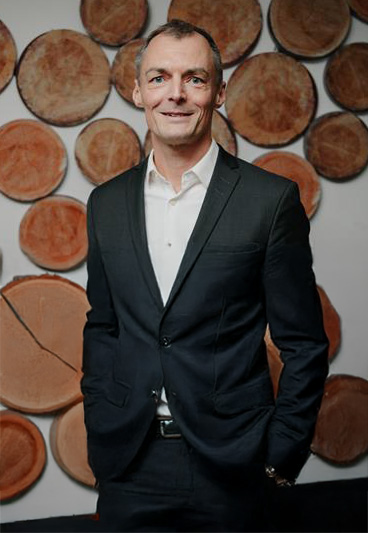 Nicolai Schaaf, Sustainability Manager, Kanthal.
For industry, the message is clear: the conditions for electrification are changing.
But policy can only create the conditions. Industry still needs technologies that can replace fossil-fuel-fired processes without compromising production.
Kanthal is ready when you are
This is where policy ambitions meet industrial realities.
Kanthal, with over 90 years of experience in electric heating, has shifted the conversation from whether electrification can happen to how quickly it can be scaled.
Our broad range of materials includes resistance-heating alloys such as Kanthal® (FeCrAl), Nikrothal® (NiCr), and others. Our electric heating elements portfolio includes technologies such as Kanthal® Super molybdenum disilicide (MoSi₂), Globar® silicon carbide (SiC), metallic elements made from Kanthal® and Nikrothal® alloys, tubes, tubular elements, and more.
Moreover, with deep expertise in industrial applications, pilot testing, and modeling, Kanthal is already driving electrification.
“Regulation, the power sector—including capacity and decarbonization—electrification technologies such as Kanthal, and target industries need to evolve together to enable the transition,” says Nicolai Schaaf, Sustainability Manager at Kanthal.
The industrial case for electrification
Fossil-free electricity sources significantly reduce the carbon footprint of industrial processes, but the benefits of electrification go much beyond just lowering emissions.
- Scope 1 reductions: Elimination of emissions from on-site combustion.
- Scope 2 reductions: Significantly reduced electricity-related emissions when powered by low-carbon or fossil-free electricity.
- Efficiency: Close to 100% energy conversion from electricity to heat, compared to major exhaust losses in gas.
- Process stability: Faster, more precise temperature and process control.
- Maintenance: No combustion byproducts, reduced risk of breakdowns and downtime.
- Regulation: Reduced exposure to rising carbon costs and border adjustment rules for non-European production.
- Safety: No open flames, leaks, or other combustion-related risks.
Which processes are ready for electrification?
Not every industrial process needs to electrify at the same pace. The greatest opportunities are found where electric heating is already technically proven and can deliver an immediate reduction in fossil-fuel use.
These processes include a range of processes and furnace types utilized across various industries. In steel production, common furnaces include annealing, galvanizing, pickling, roller hearth, walking beam, and pusher furnaces. Aluminum manufacturing involves melting, holding, and tilting furnaces. The automotive sector employs carburizing, carbonitriding, annealing, tempering, and RTO systems. Glass production generally uses forehearths and batch processing methods.
And many more.
At the same time, the boundaries are expanding.
Kanthal is prepared to collaborate with regulators and customers to transform this potential into effective solutions and speed up the transition.
Kanthal is developing and testing electric process-gas heating solutions for applications such as direct-reduced iron (DRI) and blast-furnace processes in steelmaking, cement calcination, and petrochemicals.
These are processes that have traditionally been considered particularly difficult to electrify. Advances in electric heating technology are beginning to change that.
Why choose Kanthal as your electrification partner?
Electrification may sound like a newfangled idea to some, but Kanthal has had proven solutions running in industry for decades.
Making the switch requires confidence that the technology will perform, the materials will last, and the partner you choose will be there for the long run. That’s what Kanthal offers.
- Proven experience: More than 90 years dedicated to advancing industrial heating solutions worldwide.
- Broad portfolio: An extensive range of resistance heating alloys and ready-to-use elements to cover a wide range of furnaces, atmospheres, and temperature requirements.
- Technical depth: In-house R&D and testing to match materials and designs to the toughest process conditions.
- Customization: Tailored designs to meet specific industrial needs, from small retrofits to large-scale conversions.
- Global support: Engineering, service, and technical assistance across key industrial regions.
“Electric resistance heating has been around for almost a century, with expert suppliers like Kanthal continuously pushing its boundaries into higher temperatures and new sectors and applications,” Schaaf asserts.
“Today, regulators are increasingly acknowledging electrification’s role in enhancing energy independence, aiding decarbonization, and optimizing environmental and industrial processes. Kanthal is prepared to collaborate with regulators and customers to transform this potential into effective solutions and speed up the transition,” he adds.
The upcoming industrial transition requires more than technology and ambitious goals; it demands enabling policies and market instruments to create the conditions that experienced companies can use to turn those goals into practical solutions. Kanthal is ready for this next stage—partnering with policymakers and industry as electrification moves from an idea to widespread adoption
The future is taking shape, and Kanthal is ready for it.