

The compact 5 × 5-meter design of Europe's first advanced SMR is particularly aimed at sectors considered hard to decarbonize.
Blykalla builds on more than 25 years of research at the KTH Royal Institute of Technology in Stockholm on reactor technology, nuclear fuel, and materials science. That research forms the basis for the reactor’s defining choice: liquid lead as a coolant.
Lead allows low-pressure operation and provides natural radiation shielding. It also creates an aggressive corrosion environment. Ensuring that structural materials can endure decades in liquid lead and proving that they can be manufactured consistently at scale are central to the reactor’s viability.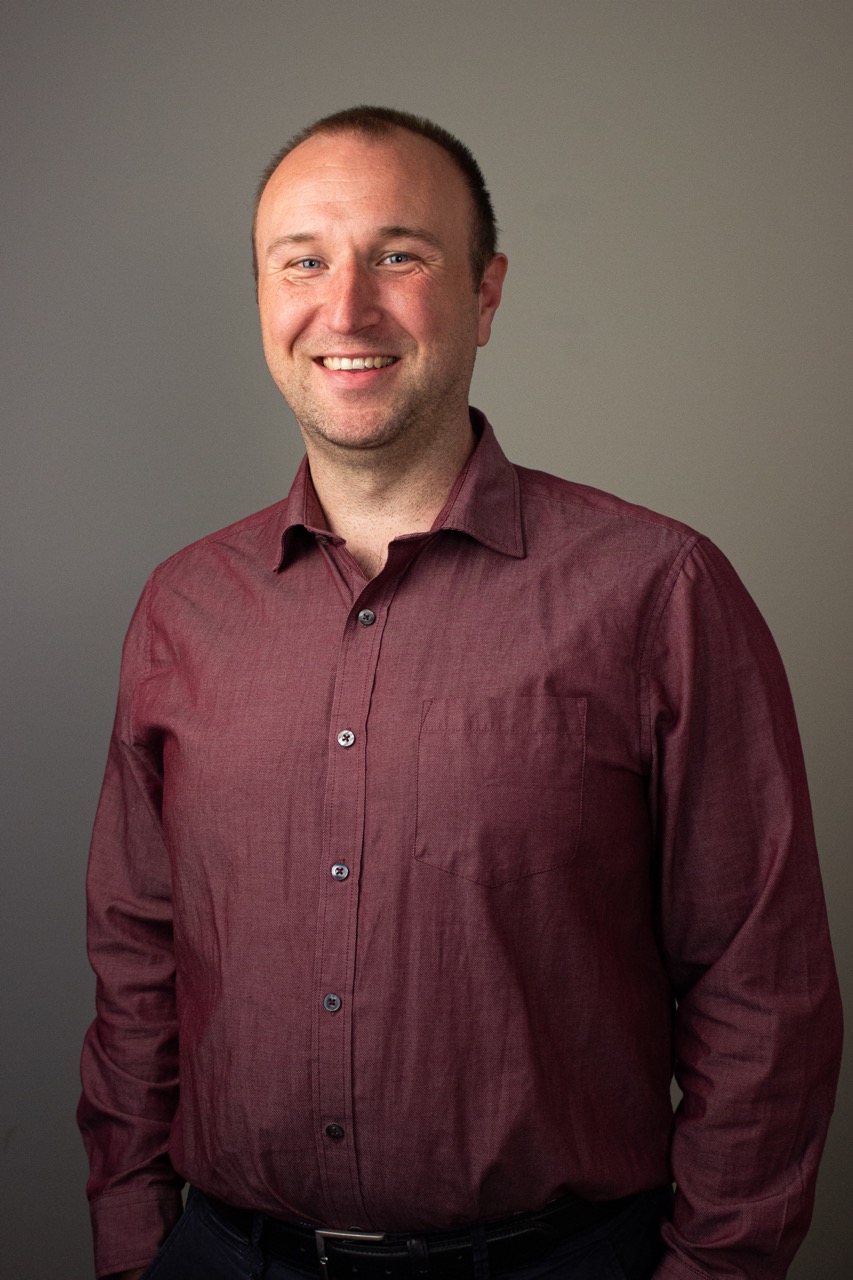 Jakob Oskarsson, Project Manager, Blykalla.
This is where Kanthal enters the picture.
Jakob Oskarsson, Project Manager at Blykalla, describes this phase as the point at which long-term research meets production realities.
“After years of research, our founders discovered key IPs that made it possible to commercialize the technology. Today, the company operates within a heavily regulated and complex industry, which makes it essential to build a team with a shared mindset that it is possible to change the world for the better.”
Built for continuous industrial demand
“SEALER’s purpose is tightly linked to industrial energy needs,” Oskarsson highlights, pointing to heavy manufacturing, data centers, and regions where electricity demand is growing faster than grid expansion.
“The reactor is designed for long operating life within a compact footprint, making it suitable for industrial clusters as well as existing grids. Its modular structure allows capacity to expand alongside demand, delivering continuous fossil-free energy where stability is critical,” Oskarsson elaborates.
A materials-driven differentiator
Liquid lead is not a novel concept in reactor design. It has historically been used in small modular reactors on submarines. The limitation, however, has always been materials. Liquid lead can corrode and erode stainless steel structures, restricting long-term deployment.
Blykalla’s patented aluminum-alloyed steel is designed to resist corrosion in liquid lead. This material will be used to protect the reactor’s fuel capsules, enabling stable operation over decades.
“The combination of corrosion-tolerant steels and uranium-nitride fuel enables stable operation in lead, enabling the reactor to deliver reliable baseload power for decades,” Oskarsson points out.
From laboratory results to industrial production
Blykalla initially focused on developing the right materials, but now the emphasis is on scaling up those lab results for industrial use.
“Blykalla and Kanthal are developing next-generation steel alloys and converting them into usable product forms such as powder, wire, sheets, and tubes.”
The collaboration also includes coating technologies, additive manufacturing, and welding methods. Kanthal’s experience in forming, joining, coating, and heat treatment is pivotal to turning promising alloys into components suitable for real reactor environments.
“If steels can maintain their integrity in liquid lead over decades, it fundamentally changes the economics and reliability of the reactor,” Oskarsson states. “Long-term corrosion resistance reduces maintenance, extends lifetime, and strengthens the competitiveness of a passively safe design. It opens the door to commercial deployment of lead-cooled technology.”
These steels form a stable oxide layer that protects against corrosion and embrittlement in liquid lead. This layer is only a few micrometers thick but is self-healing – meaning that if it is damaged during operation, aluminum diffuses within the steel to reform the protective coating. This property, Oskarsson notes, is key to achieving long-term durability and stable reactor operation.
Collaboration in practice
For Blykalla, the collaboration with Kanthal extends beyond alloy development.
“We are working with Kanthal to turn next-generation steels into usable product forms such as plates and wires, and to test the processes required to manufacture them at scale,” Oskarsson says.
What stands out is Kanthal’s ability to take a new alloy and see quickly how it behaves in real production.
“That combination of openness, technical ambition, and practical process knowledge enabled us to move faster and with more confidence as we prepare materials for use in SEALER.”
As manufacturing approaches, the questions change.
“Kanthal is a key partner in our journey to take our materials to industrial scale,” Oskarsson expresses. “The focus shifts from proving that the material works to proving that it can be produced consistently and cost-effectively.”
That shift comes as electricity demand rises sharply. Digital infrastructure is expanding, and AI is proliferating at near light speed, increasing power consumption across sectors. At the same time, emissions must fall without compromising efficiency and reliability. Functionality must meet sustainability.
SEALER is Blykalla’s response, with the ambition of delivering Sweden’s next nuclear reactor within this decade.