

The goal was to lower energy use from 5.3 kWh to 4.0 kWh. Kanthal collaborated with the customer to develop a solution using the Energy Saving Element. Simulations indicated that the new design could cut energy consumption by about 1.6 kWh, roughly 30 percent. Testing at the customer’s facility confirmed these results, with the evaluation heating element further reducing energy use to approximately 3.7 kWh.
Expanding the impact beyond a single process
Reducing power consumption in one process is a starting point. For companies in energy-intensive industries, it is closely linked to emissions and shapes how operations are run, from sourcing to production design and investment decisions.
As expectations rise and regulations become more stringent, this also affects long-term credibility.
Kanthal works with customers to consider power consumption while maintaining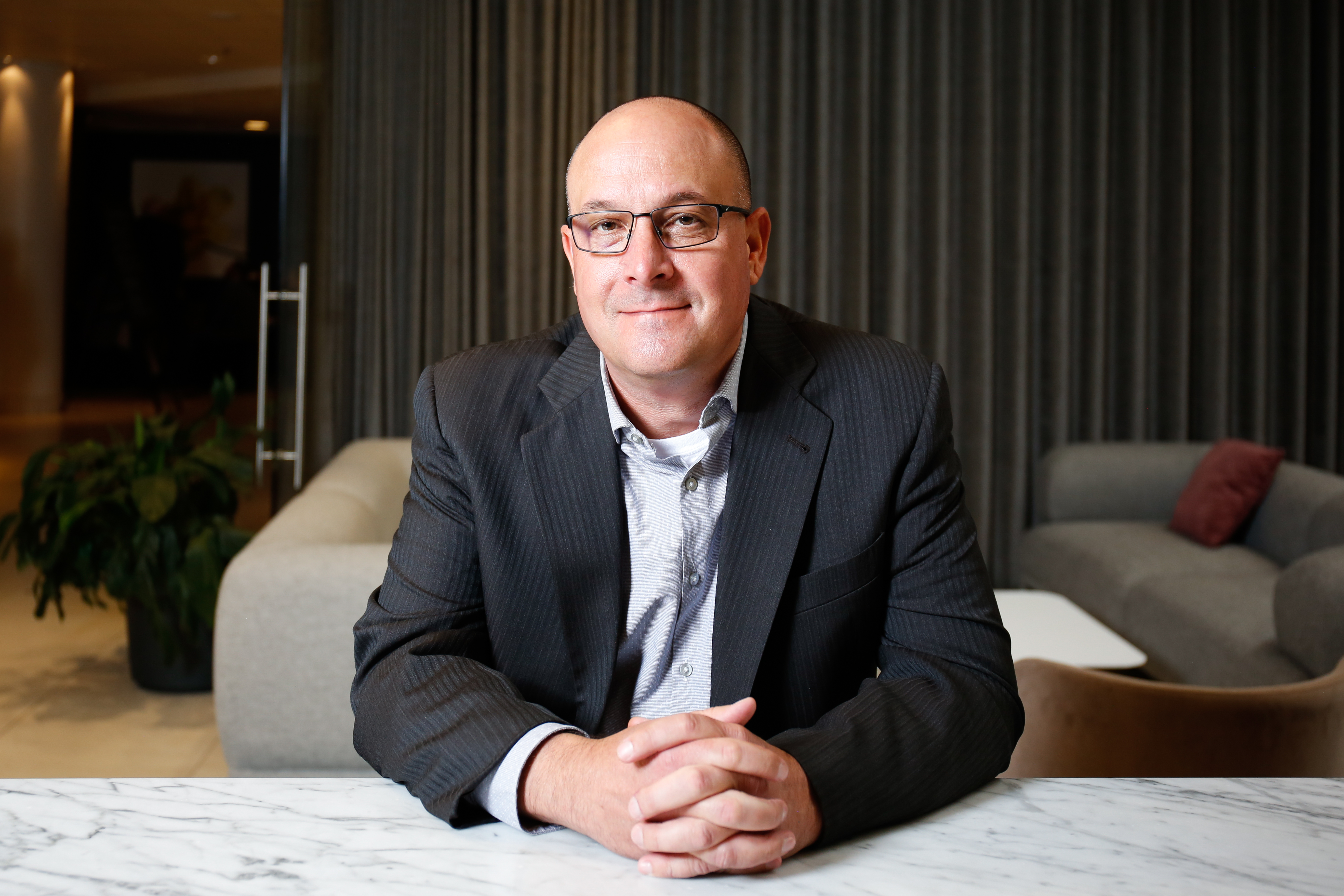 Tyke Johnson, Global Product Manager, Kanthal. stable process conditions. The same approach is applied within its own operations.
By 2025, Kanthal had cut CO₂ emissions by 57 percent compared to its 2019 baseline, exceeding its validated 2030 target of 54 percent five years ahead of schedule.
This progress has been driven by the electrification of processes and the switch to certified fossil-free electricity.
Practical operational results
In many cases, power savings help offset the cost of new heating elements. Since less power is needed to maintain the temperature, the heating elements are expected to last longer.
Variants have been used in high-temperature horizontal furnaces to reduce heat loss in critical areas while maintaining the cooling rates necessary for productivity.
“The Kanthal Energy Saving Element has the potential to improve process performance. A design variant has proven effective in high-temperature horizontal furnace applications by reducing heat loss in critical areas while still maintaining the cooling rates of a traditional heating element. Achieving a balance between energy savings and optimal cooling rates for productivity is essential,” says Tyke Johnson, Global Product Manager at Kanthal.
Working in partnership
Kanthal brings more than 40 years of experience in semiconductor heating across different furnace types, process conditions, and customer requirements.
Each challenge is addressed with tailored solutions for specific furnace setups and process requirements.
As Johnson puts it, “Embracing a customer-centric approach means understanding that every challenge in semiconductor manufacturing is unique. It’s all about collaboration, where our clients’ challenges become ours, and together, we craft solutions that surpass expectations.”
This method of operation is supported by global expertise, enabling heating elements to be engineered for a long service life while ensuring stable operating conditions.
The partnership goes beyond supplying components. “In choosing Kanthal, you’re embracing a legacy of excellence, ingenuity, and a commitment to pushing the boundaries of what’s possible. At Kanthal, we’re not just providing products; we’re offering a partnership in precision and progress,” assures Johnson.
Past meets present
Kanthal’s semiconductor heating portfolio includes heavy-gauge and light-gauge Fibrothal® heating elements designed to support processes across a temperature range of 300 to 1,350°C (572 to 2,462°F).
These heating elements are compatible with both horizontal and vertical furnace designs across different brands and configurations. They accommodate wafer substrates up to 300 mm and can be customized to various production needs, including multiple zone configurations.
The portfolio builds on earlier technologies. Fibrothal® heating elements were previously supplied under MRL and Sandvik Materials Technology, and are also known as Aztec, Helix II, Helix, Black Max, or Magna SW in North America, and White John in Europe.
What started as MRL technology now continues within Kanthal’s semiconductor heating offering.